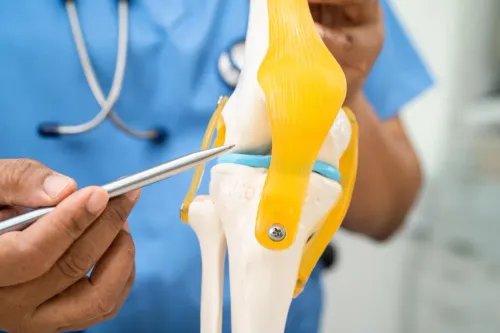

Arthritis can gradually change the way a person walks, climbs stairs, gets out of a chair, exercises, or performs everyday activities. Although many people associate arthritis only with ageing, different forms of arthritis can affect joints for different reasons. Choosing appropriate Arthritis Treatment therefore starts with identifying the type and severity of the joint problem.
People experiencing persistent joint stiffness in Chembur may benefit from assessment when symptoms repeatedly interfere with normal movement.
What Happens Inside an Arthritic Joint?
A healthy joint allows bones to move against one another with minimal friction. Cartilage helps create a smooth surface and absorbs forces during movement.
In osteoarthritis, this cartilage gradually deteriorates. Changes can also occur in the underlying bone and surrounding tissues. This may lead to pain, stiffness, swelling, reduced flexibility, and difficulty performing weight-bearing activities.
Other forms of arthritis can involve inflammatory or autoimmune processes, making accurate diagnosis important before treatment begins.
Common Symptoms of Arthritis
Symptoms vary depending on the affected joint and underlying condition. Typical concerns include:
- Pain during movement
- Stiffness after periods of rest
- Reduced range of motion
- Swelling around the joint
- Difficulty climbing stairs
- Pain while walking longer distances
- Trouble getting up from a low chair
- Increasing dependence on pain medication
Symptoms may initially appear only after strenuous activity and become more frequent as joint changes progress.
Treatment Depends on the Stage
There is no single arthritis treatment suitable for every patient. Early-stage problems may be managed with exercise, physiotherapy, weight management, activity modification, and appropriate medication.
Strengthening the muscles surrounding an affected joint can improve support and function. Maintaining mobility is also important because avoiding movement completely can contribute to stiffness and muscle weakness.
Some patients may be considered for injections depending on their diagnosis and clinical findings.
When arthritis becomes advanced, conservative measures may no longer provide sufficient relief. Joint replacement can then become a consideration, particularly when pain and limited mobility significantly affect daily life.
Do X-Rays Decide the Treatment?
X-rays provide valuable information about joint changes, but treatment should not be decided from an image alone.
Two people with apparently similar X-rays may experience very different symptoms. The doctor also considers pain severity, mobility, age, activity expectations, overall health, previous treatment, and the impact of arthritis on everyday life.
This is why clinical examination remains an important part of arthritis assessment.
When Is It Time to Seek Help?
An occasional painful day does not necessarily indicate severe arthritis. Repeated limitations deserve more attention.
Assessment becomes especially useful when pain regularly interrupts sleep, walking distance decreases, stairs become difficult, or normal household and professional activities require significant adjustment.
The purpose of treatment is not merely to change an X-ray. It is to improve comfort, mobility, and useful joint function wherever medically possible.
Patients should also avoid relying indefinitely on self-prescribed pain medicines without understanding why symptoms persist. A clear diagnosis helps determine whether rehabilitation, medication, lifestyle changes, injections, or surgical treatment should be considered.
Arthritis management works best when decisions are based on the individual joint, symptoms, functional limitations, and overall health rather than age alone.
Keywords