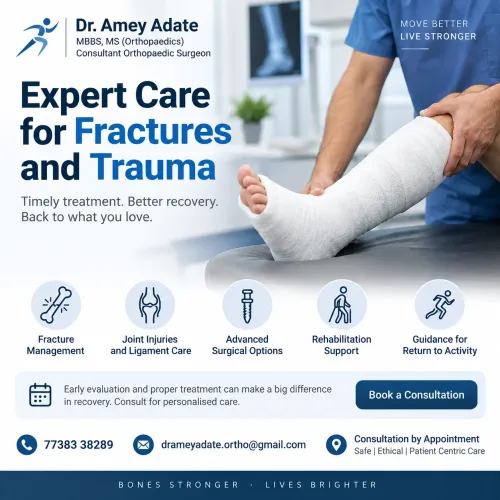
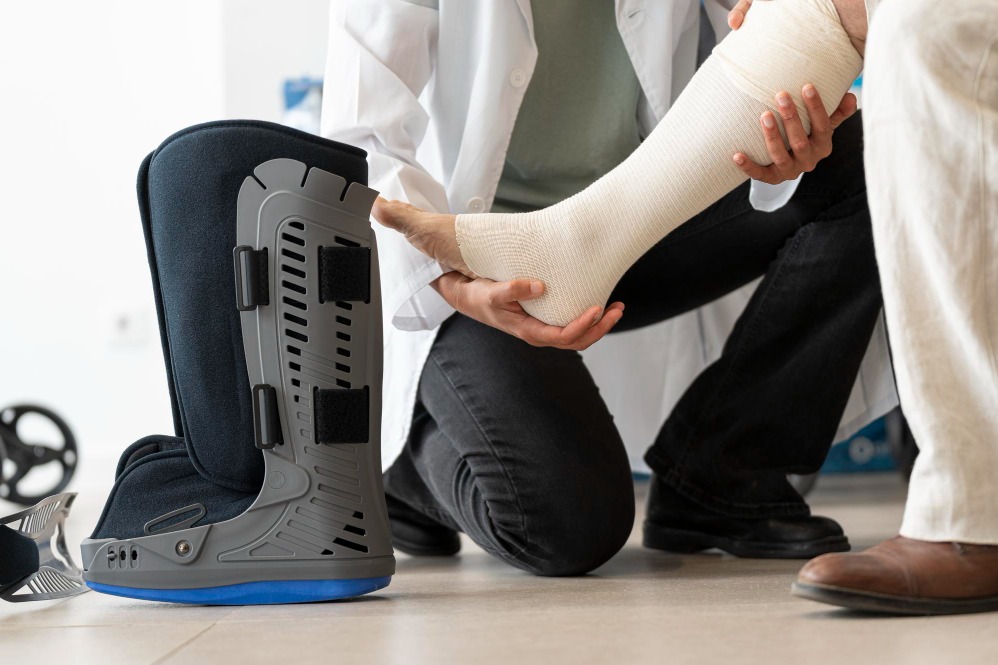
A fracture can occur after a simple fall, road accident, sports injury, workplace incident, or significant trauma. Some fractures cause immediate deformity and severe pain, while others may initially resemble a sprain. Proper Fracture Care is important because the position of the broken bone, stability of the injury, surrounding tissues, and condition of the joint can all influence recovery.
Anyone sustaining a significant injury in Vikhroli should avoid assuming that the ability to move the limb rules out a fracture.
What Should You Do Immediately After an Injury?
If a fracture is suspected, unnecessary movement should be minimized. Trying to repeatedly test the injured arm or leg can increase pain and potentially worsen tissue injury.
Basic precautions include:
- Support the injured area
- Avoid unnecessary weight-bearing
- Do not attempt to straighten visible deformity yourself
- Seek medical evaluation after significant trauma
- Obtain urgent care for open wounds or exposed bone
Severe bleeding, loss of sensation, pale or cold fingers or toes, major deformity, or high-energy trauma requires prompt medical attention.
How Is a Fracture Diagnosed?
An orthopaedic examination helps determine where the injury occurred and whether there may also be ligament, nerve, blood vessel, or joint involvement.
X-rays are commonly used to identify fractures and evaluate alignment. CT scans may provide additional detail for complex fractures, particularly when a joint surface is involved. MRI is useful in selected injuries where conventional X-rays do not fully explain persistent symptoms.
Does Every Fracture Need Surgery?
No. Many fractures can heal successfully with appropriate immobilization using a cast, splint, brace, or other support.
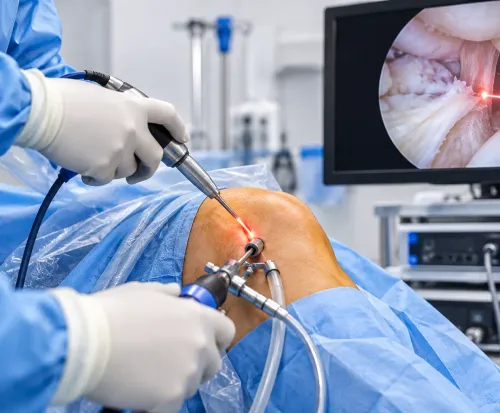
Surgical fixation may be considered when the broken fragments are significantly displaced, the fracture is unstable, the skin is compromised, the joint surface requires reconstruction, or maintaining satisfactory alignment without surgery is unlikely.
The location of the fracture also matters. A treatment suitable for one bone may not be appropriate for another.
Healing Requires Follow-Up
Fracture treatment does not end when a cast is applied or an operation is completed. Follow-up helps the orthopaedic surgeon monitor alignment and bone healing.
Patients should follow instructions about weight-bearing carefully. Walking too early on an unstable fracture may interfere with healing, while unnecessary prolonged immobilization can contribute to stiffness and muscle loss.
The correct timing of movement depends on the injury.
Nutrition, smoking status, age, diabetes, bone health, and certain medications can also influence healing. Patients should tell their doctor about relevant medical conditions and medicines.
Rehabilitation Is Part of Recovery
After immobilization, stiffness and weakness are common. Physiotherapy may be recommended to gradually restore movement, strength, balance, and function.
Recovery time varies considerably. A small stable fracture and a complex joint fracture cannot be expected to follow the same timeline.
Dr Amey Adate manages fractures along with other orthopaedic injuries, with treatment planning based on fracture pattern and patient needs.
The important principle is simple: fracture care should restore safe alignment, support bone healing, protect surrounding structures, and help the patient progressively return to useful movement. Timely assessment provides the information needed to make those decisions safely.
Keywords