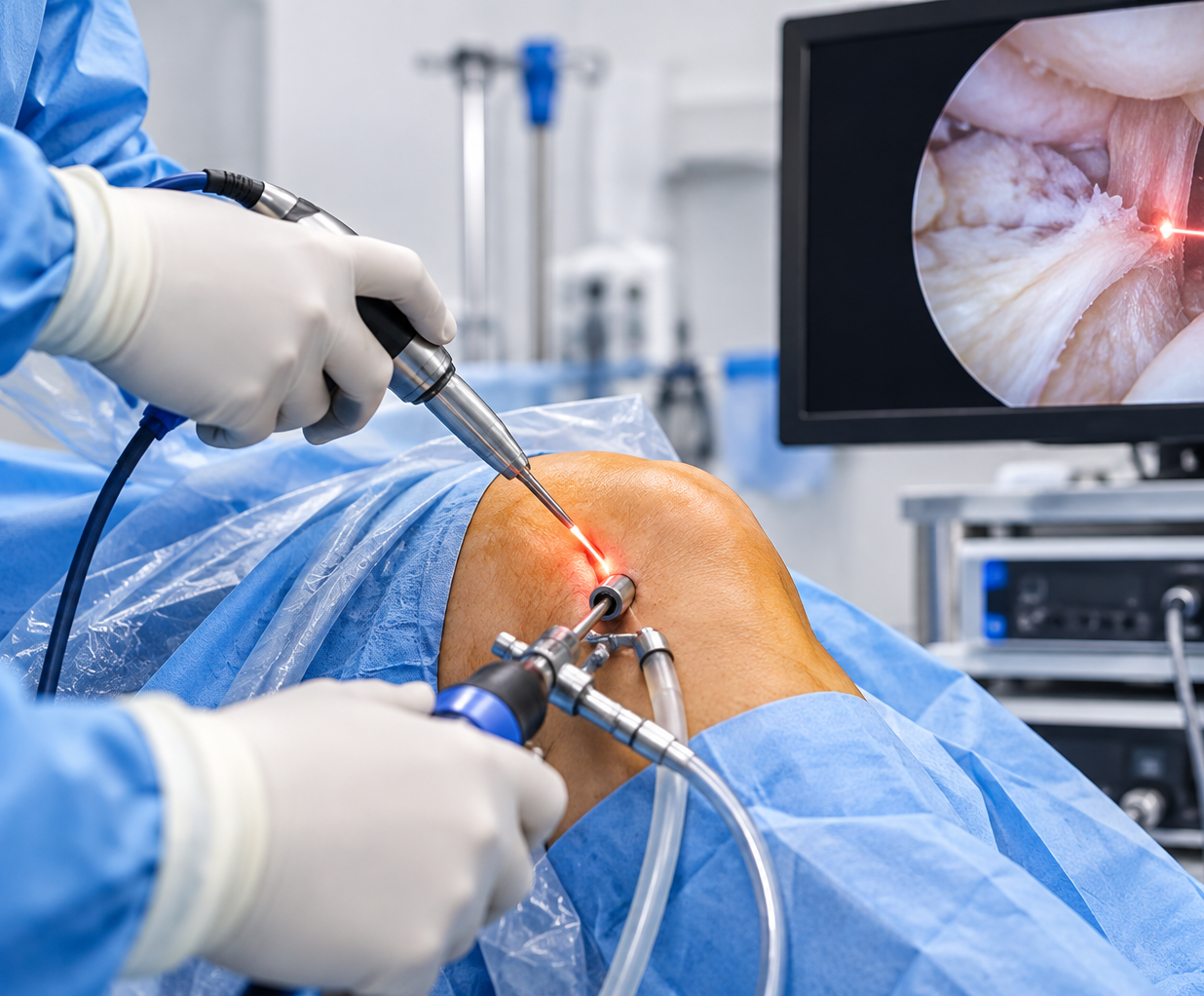
Ligament injuries can make a previously stable joint feel unreliable during walking, running, turning, jumping, or sports. People searching for laser ligament surgery are often looking for a minimally invasive solution, but the terminology surrounding ligament procedures can be confusing.
For patients in Powai, understanding what procedure is actually being recommended is more useful than choosing treatment based on the word “laser.”
What Is a Ligament Injury?
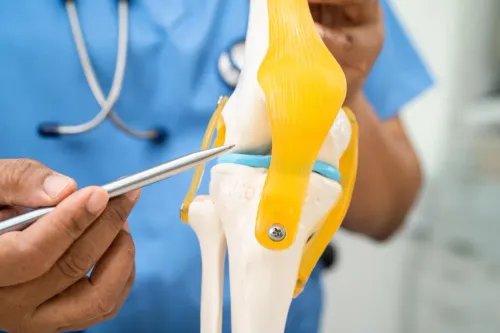
Ligaments are strong bands of tissue that connect bones and help stabilize joints. They can be stretched or torn when a joint moves beyond its normal range.
Knee ligament injuries are particularly common in sports and sudden twisting incidents. The ACL is one of the best-known examples, although other ligaments can also be injured.
Symptoms may include swelling, pain, instability, reduced movement, or the feeling that the knee is giving way.
Does Laser Mean Arthroscopic Surgery?
Not necessarily.
Patients sometimes use terms such as laser surgery, keyhole surgery, and arthroscopic surgery interchangeably. They are not automatically the same thing.
Arthroscopy is a minimally invasive technique in which a small camera is introduced into a joint through small incisions. Special surgical instruments can then be used to assess or treat the damaged structures.
The exact technology used during ligament treatment depends on the procedure. Therefore, patients should ask what operation is actually planned rather than assuming a particular technique is involved because of a marketing term.
Does Every Torn Ligament Require an Operation?
No.
Treatment depends on which ligament is injured, whether the tear is partial or complete, the degree of instability, associated cartilage or meniscus damage, the patient's age, activity level, occupation, and sporting goals.
Some ligament injuries can be managed with rehabilitation, bracing, activity modification, and progressive strengthening.
Surgical reconstruction may become appropriate when significant instability persists or when the patient needs a stable joint for demanding physical activity.
Questions Worth Asking Before Surgery
Patients considering ligament surgery can ask:
- Which ligament is damaged?
- Is the tear partial or complete?
- Are other structures injured?
- Can rehabilitation be tried first?
- What surgical technique is recommended?
- Will reconstruction require a graft?
- When can weight-bearing begin?
- How long will structured rehabilitation continue?
- When may work or sport resume?
These questions provide far more useful information than focusing solely on incision size.
Rehabilitation Influences the Result
Ligament reconstruction is only one part of recovery. Rehabilitation helps restore joint movement, muscle strength, balance, control, and confidence.
Returning to sport too early can place unnecessary stress on the healing reconstruction. Progress should therefore be based on recovery milestones rather than an arbitrary date alone.
The goal of ligament treatment is to restore useful stability while protecting the joint from repeated episodes of giving way. Patients should seek a diagnosis first, understand the exact procedure being proposed, and discuss realistic recovery expectations.
A modern minimally invasive approach can be valuable when surgery is indicated, but the best treatment remains the one matched to the actual ligament injury and the patient's functional needs.
Keywords